19 May 2026
8 min read
How to Use a Pizza Peel
Pizza Essentials
How to Use a Pizza Peel
with Adam Atkins, Peddling Pizza
Adam Atkins has spent years working in and around professional pizzerias — and his Peddling Pizza series is where he shares everything he knows, no gatekeeping. The peel is the one bit of kit that trips most home pizza makers up, so Adam's breaking it down properly.
In this video, Adam covers everything from prepping your dough on the right surface to launching it cleanly into a 500°C oven. You'll learn why surface temperature matters more than you'd think, when to use a metal peel vs a wooden one, and how to nail a confident, clean launch every single time.
Proper pizza at home doesn't need luck. It needs the right know-how — and Adam's got plenty of it.
Here's what most people get wrong.
And how to fix it.
Your prep surface
- Use plenty of flour when stretching your dough — it gives you a non-stick layer underneath. But before you start topping, shake or slap off any excess. Too much loose flour in the oven burns and adds bitterness.
- Before you add any toppings, check the dough actually moves. Give it a gentle shimmy — if it slides, you're good. If it's grabbed, sort it now, not once it's loaded.
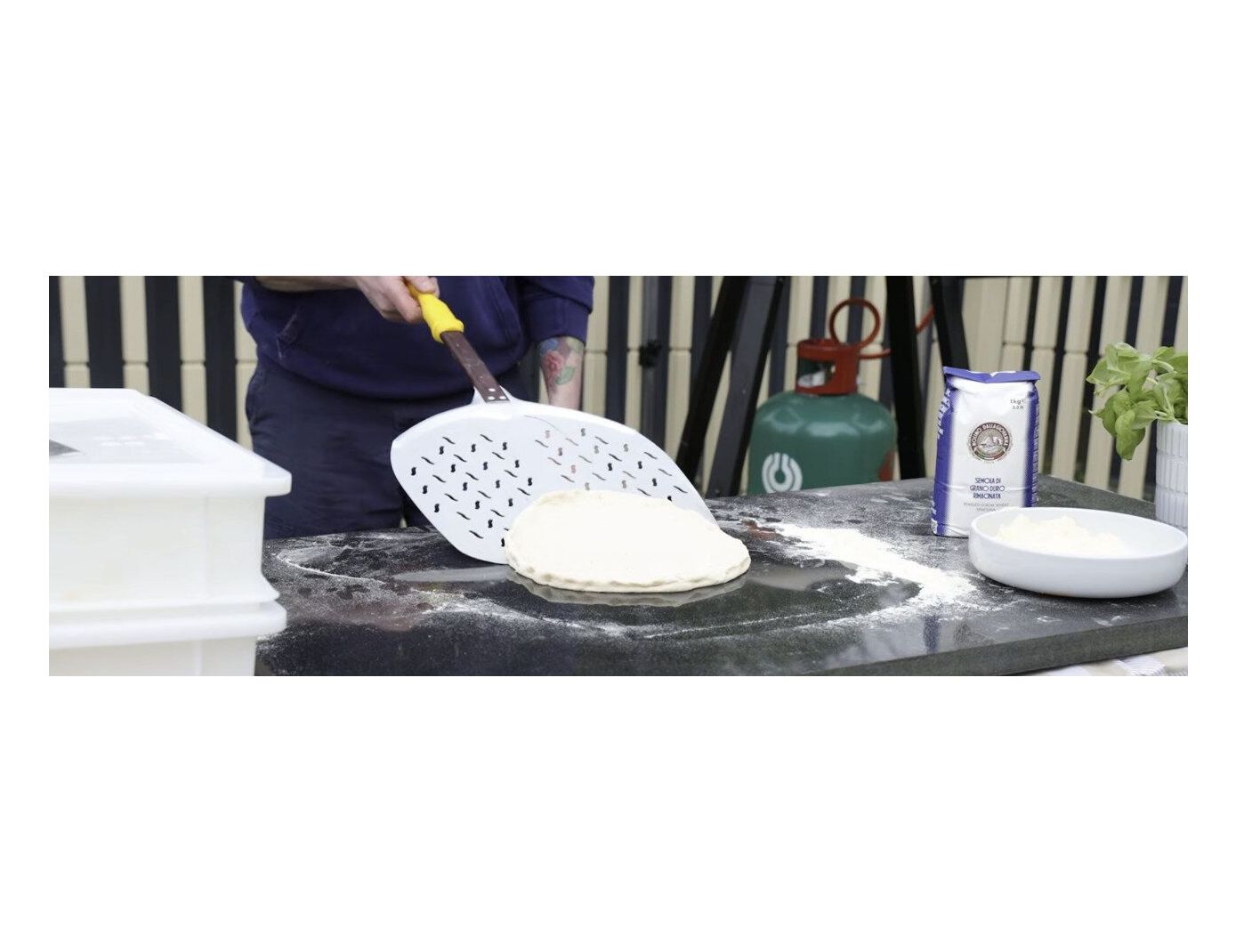
- Surface temperature matters. A black marble or stainless steel worktop sitting in direct summer sun will heat up fast and make your dough stick within seconds. Work in the shade, or use a wooden board — it stays cooler and is much more forgiving.
Quick tip: If the dough starts to stick to your surface, carefully lift one edge and dust a little flour underneath. Sort it before you top it.
Using your peel
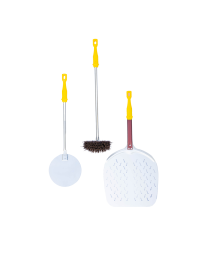
- A quality perforated aluminium peel — like the Lily Peel 33cm — is seriously non-stick. If your stretched dough goes on freely, it will come off freely. Always test with a gentle shake before topping.
- Keep your peel cool. If it's been sitting on top of the oven or out in the sun, it'll be warm enough to make the dough grab instantly. Store it away from heat sources between uses.
- Metal peels need speed — once your topped pizza is on there, work fast. The longer it sits, the more it sticks. Wooden peels are more forgiving: you can actually assemble your pizza directly on a wooden peel and take your time, because the dry surface won't grab.
The launch
- Confidence is everything. Once the peel goes into the oven, don't hesitate. At 500°C, a metal peel heats up in seconds — any pause and the dough will start to grip. Commit to the move.
- Keep the peel flat. Angle it slightly downward toward the stone, then pull back in one swift motion — think of a magician pulling a tablecloth. Smooth and fast, not jerky.
- If you're not ready for the single-pull technique yet, that's fine. Slide the peel in, let the leading edge of the pizza catch the stone, and use small outward pulls to coax it off. Always pull outward — never shake inward.
Watch out: Shaking the peel side to side creates riffles — small folds in the dough that don't contact the stone. Those spots won't cook through and are likely to tear when you go to turn the pizza.